
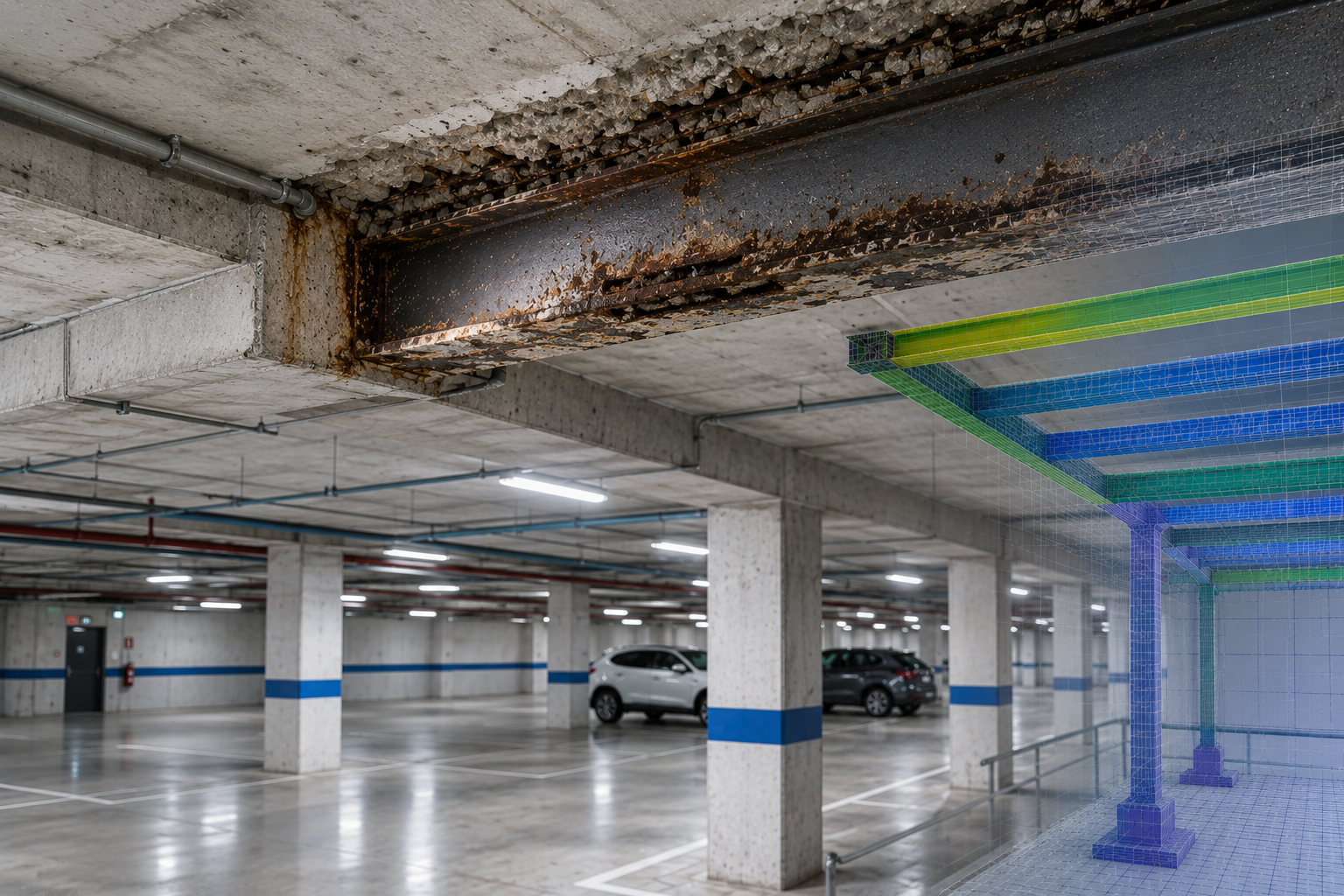
Existing structures are subject to a continuous ageing process resulting from service conditions, environmental exposure, and the development of structural pathologies that may progressively compromise their load-bearing capacity and overall safety. In this project, INCIMAT carried out a detailed structural inspection of an underground parking facility with the objective of assessing the condition of various structural elements affected by advanced deterioration processes.
The scope of work included a specialized visual inspection, a comprehensive photographic survey, and a technical assessment of the pathologies identified in beams, floor slabs, and steel strengthening elements installed during previous interventions. The investigation revealed severe corrosion processes, significant loss of cross-sectional capacity in steel members, concrete cover spalling, persistent water infiltration, and several construction deficiencies affecting existing strengthening systems.
The study enabled the identification of the root causes of the observed deterioration, primarily associated with drainage deficiencies, long-term water ingress, and unfavorable environmental conditions. It also allowed the assessment of the potential structural consequences arising from the progression of the damage. Particular attention was given to the risks associated with localized structural failure, the propagation of deterioration to adjacent areas, and the implications for the safety of facility users.
As a result of the inspection, a comprehensive technical diagnosis of the affected area was developed, together with an intervention strategy focused on eliminating the causes of deterioration, rehabilitating damaged structural elements, and implementing new strengthening solutions adapted to the actual service conditions of the structure.
This type of project forms part of INCIMAT’s structural assessment, rehabilitation, and asset preservation services, enabling property owners, communities, and infrastructure managers to make informed decisions regarding maintenance and safety, extending the service life of their assets and reducing the risk of emergency interventions.